

How to Choose SEO Services in the AI Era: What to Ask Before You Hire
What good SEO services include, how agencies, freelancers and in-house hires compare, what drives the cost, the red flags and the questions to ask before you hire.
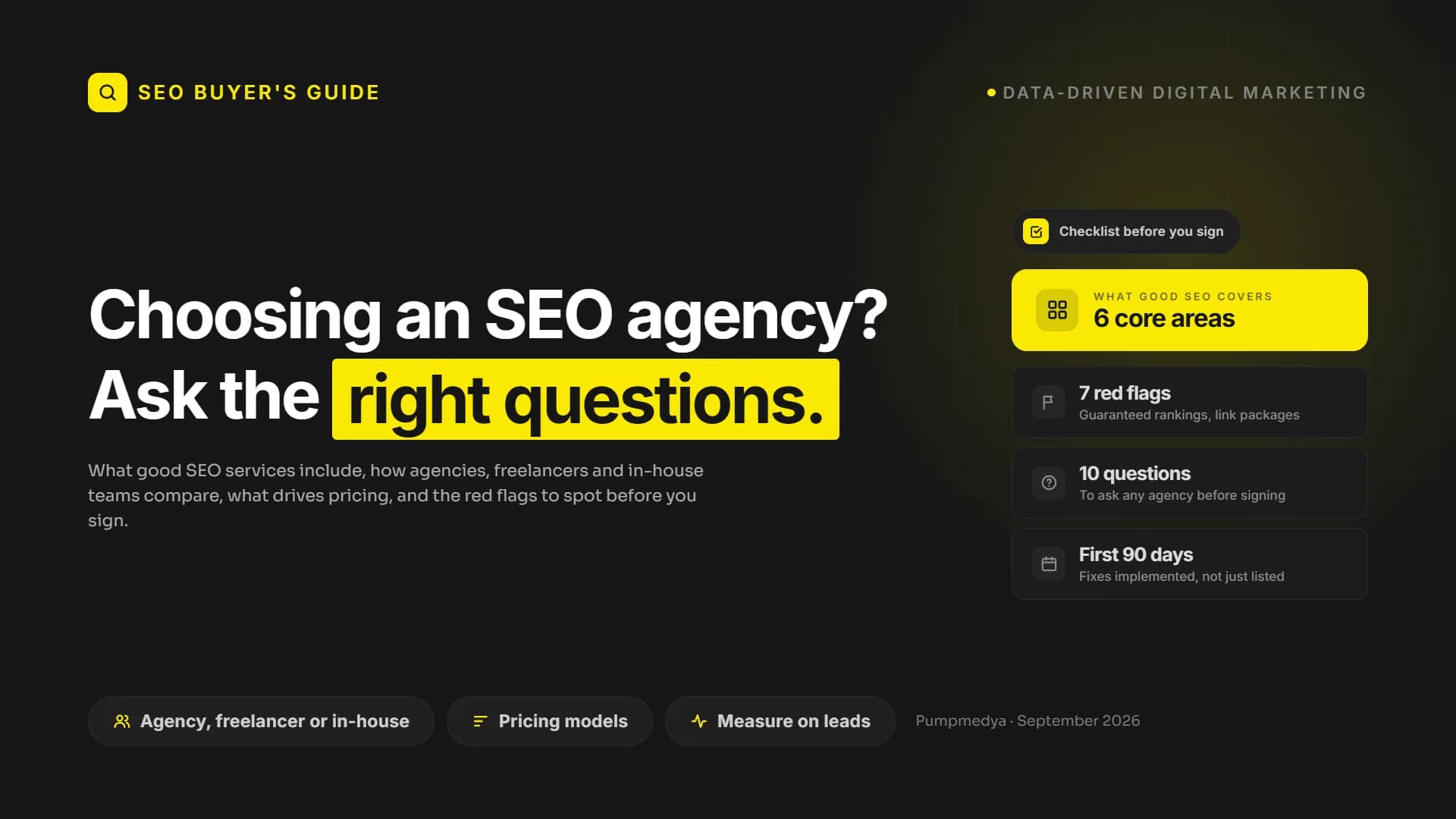
Hiring for SEO services is one of those decisions that looks simple and turns out to be hard. Every SEO company promises more traffic, every proposal uses the same buzzwords, and the results take months to show up. By the time you can judge the work, you have already paid for a good part of it.
This guide is for companies getting ready to hire an SEO agency, consultant or freelancer. It explains what good SEO services actually include, how the different working models compare, what drives the cost, which red flags to watch for and the questions to ask before you sign anything.
Search itself is changing. People now get answers from Google's AI Overviews and from assistants like ChatGPT, not just from a list of links. So when you evaluate an SEO company today, you also need to ask whether it can make your brand visible on these new surfaces.
How to choose SEO services: start with what the work includes
You can't compare proposals if you don't know what the work is. Good SEO services usually cover six areas. Not every company needs all six with the same weight, but a serious agency should be able to explain each one.
- Technical SEO. Making sure search engines can crawl, render and index your site: site speed, mobile usability, redirects, canonical tags, structured data, sitemaps and fixing errors reported in Search Console. Our article on the power of technical SEO goes deeper into this layer.
- Keyword and content strategy. Finding what your customers actually search for, mapping those searches to pages and planning new content that answers real questions.
- On-page optimization. Titles, headings, internal links, meta descriptions and page structure, so each page clearly matches one search intent.
- Local SEO. For businesses serving specific cities or regions: Google Business Profile, consistent business details and location pages that are genuinely useful.
- Links and digital PR. Earning mentions and links from relevant, trustworthy sites through content worth citing, partnerships and outreach. Not buying them.
- Measurement and reporting. Tracking what changed, why it changed and what it means for leads or sales.
If a proposal only talks about keywords and links, a big part of the work is missing.
In-house, agency or freelancer?
There is no model that is right for everyone. Each one fits a different situation.
An in-house SEO specialist knows your product and team well and can move quickly on small changes. The limits are breadth and coverage: one person rarely has deep skills in technical SEO, content and analytics at the same time, and the work stops when they are on vacation or leave the company.
A freelancer or independent consultant is often a good fit for a clearly defined task, such as a technical audit or a site migration check. The quality depends entirely on one person, so check their past work and availability carefully.
An SEO agency brings several skill sets together: developers, content writers, analysts. It suits companies that need ongoing work across several areas or that want SEO connected to paid ads, the website and the CRM. The risk is ending up with a junior account manager and a cookie-cutter package that doesn't fit your business.
Many companies combine models: an internal owner who knows the business, plus an agency or consultant for specialist work.
What drives SEO services cost
Agencies price SEO in three common ways.
- Monthly retainer. A fixed fee for an agreed scope of ongoing work. Suits sites that need continuous content, technical maintenance and reporting.
- Project fee. A defined deliverable, such as an audit, a migration or a content plan, for a set price.
- Hourly or daily rate. Common for consulting, training your team or reviewing work done by others.
Instead of comparing totals, compare what drives them. The main factors are the size and technical condition of the site, how many languages and markets you target, how competitive your industry is in search, how much new content is needed, who writes it and who implements technical changes. A low fee that excludes content and development often costs more in the end, because nothing actually gets changed on the site.
Red flags when choosing an SEO company
- Guaranteed rankings. Nobody controls Google's results. An agency that guarantees the number one spot either misunderstands SEO or plans to report on terms nobody searches for.
- Guaranteed top spots in AI search. ChatGPT and Google's AI Overviews decide for themselves which sources to show, and answers vary from person to person. An agency that guarantees a spot there is selling a new version of the old ranking guarantee.
- Secret methods. Good SEO is not a secret. If an agency won't explain what it does to your site, assume you wouldn't like the answer.
- Buying links or link packages. Paid link schemes violate Google's spam policies and can lead to lost visibility. Our analysis of the Google August 2026 spam update shows why shortcuts are a poor long-term bet.
- Vague reports. A report full of charts with no explanation of what was done, what changed and what happens next.
- Long lock-in contracts. A long minimum term with no way out if the agreed work isn't delivered. SEO does take time, but a good agency earns its renewal.
- No access to your own accounts. Search Console, analytics and any content created should belong to you, not the agency.
Questions to ask an SEO agency before you sign
- What exactly will you do in the first three months, and who on your team will do it?
- Who implements technical changes: you, our developers or both?
- How do you decide which keywords and pages to prioritize?
- How do you earn links, and can you show examples?
- What will the monthly report include, and who walks us through it?
- Which of our goals can SEO realistically support, and which can it not?
- Can you show work for a company with a similar site size or market, with permission to share it?
- Who owns the content, accounts and data if we stop working together?
- What is the notice period, and what happens to work in progress?
- How will SEO connect with our paid ads, website and sales process?
The quality of the answers matters more than the answers themselves. Specific, honest replies that include some “it depends, and here is what it depends on” are a good sign.
Is the agency ready for AI search?
Google's AI Overviews and assistants like ChatGPT and Perplexity give the user a single answer and make room for only a handful of sources. Classic SEO is the foundation of that visibility, but on its own it is no longer enough. Ask the agency:
- Do you measure our visibility in AI answers? Ask how they track which questions your brand shows up for in AI Overviews and in ChatGPT responses. Measurement here is still partial. The most honest answer admits that and still offers a consistent method. Neither "nobody can measure this" nor precise numbers promised up front is a good sign.
- Are our structured data and business details consistent? AI systems recognize your brand from the structured data on your site, your Google Business Profile and the other sources that mention you. Your company name, address, services and areas of expertise should match and be up to date everywhere. Does the agency check this?
- How do you use AI in content production? AI can speed up research and drafting. But pages mass produced without adding value fall under scaled content abuse in Google's spam policies and can hurt the entire site. Ask directly who writes, who reviews and where the real expertise comes from.
- Do you create content worth citing? AI answers favor sources with original data, clear definitions and expert judgment. A rewrite of other sites is rarely cited.
We explain how this works and what can be measured in our practical guide to getting your brand cited by AI search.
What a good first 90 days looks like
Nobody can promise results in the first 90 days, but you can expect clear activity. A typical sequence looks like this:
- Access and baseline. Access to Search Console, analytics and the site, and a record of current clicks, impressions, indexed pages and lead volume.
- Technical audit. A prioritized list of issues, separated into what blocks visibility and what is minor.
- Keyword and page mapping. Which searches matter for your business, which existing pages target them and where the gaps are.
- First fixes. The most important technical and on-page changes implemented, not just listed.
- Content plan. Topics ranked by business value, with the first pieces briefed or published.
- Measurement setup. Form submissions and calls tracked as conversions, so SEO can be judged on leads.
If after three months all you have is an audit document and nothing has changed on the site, ask why.
How to measure whether SEO is working
Rankings alone are a weak measure. They vary by location and device, and a top position for a term nobody searches brings nothing. Look at a combination instead:
- Search Console clicks and impressions for the pages and queries that matter to your business, compared with the same period last year where seasonality is a factor.
- Indexed pages and technical health, so important pages are actually eligible to appear.
- Qualified leads from organic search, tracked through forms, calls and your CRM, not just sessions.
- Revenue or pipeline influenced by organic visits, where your data allows it.
If SEO has been running for a while and these numbers are flat, our article on what to do when SEO isn't delivering enough results explains how to find the cause with data.
Frequently asked questions
How long does SEO take to show results?
It depends on the site's current condition, the competition and how much of the work is actually implemented. Technical fixes can show an effect sooner, while content and authority build over a longer period. Be wary of any fixed promise.
Has AI killed SEO?
No, but it has changed it. AI answers draw largely on pages that search engines already crawl and trust, so technical health, useful content and credibility are still the foundation. What has changed is that some searches get answered without a click, and success is measured not only in traffic but also in whether your brand shows up in the answers.
Is SEO a one-time project or ongoing work?
Both exist. An audit or migration is a project. Keeping content, technical health and competitiveness in shape is ongoing, because your site, your competitors and search engines keep changing.
Should SEO and paid ads be handled by the same agency?
Not necessarily, but they should share data. Search terms that convert in ads are useful for SEO, and strong organic pages can reduce reliance on paid clicks for some queries.
Can we do SEO ourselves?
Many basics, such as clear page titles, useful content and fixing Search Console errors, can be handled internally. Specialist help is most valuable for technical issues, migrations, multilingual sites and strategy.
Next step
Choosing an SEO company really means choosing how your website will win customers over the next few years. If you want SEO planned around qualified leads and connected with your ads and website, take a look at our SEO and GEO services or get in touch to talk it through.
Your site may look great. Does it actually work?
PumpAudit is the AI assisted auditor built by Pumpmedya. It analyzes your site across five areas, every finding is checked by a specialist, and the report is with you within 3 working days. Credited against your first project.
See PumpAuditKeep reading
 Digital Marketing Strategy
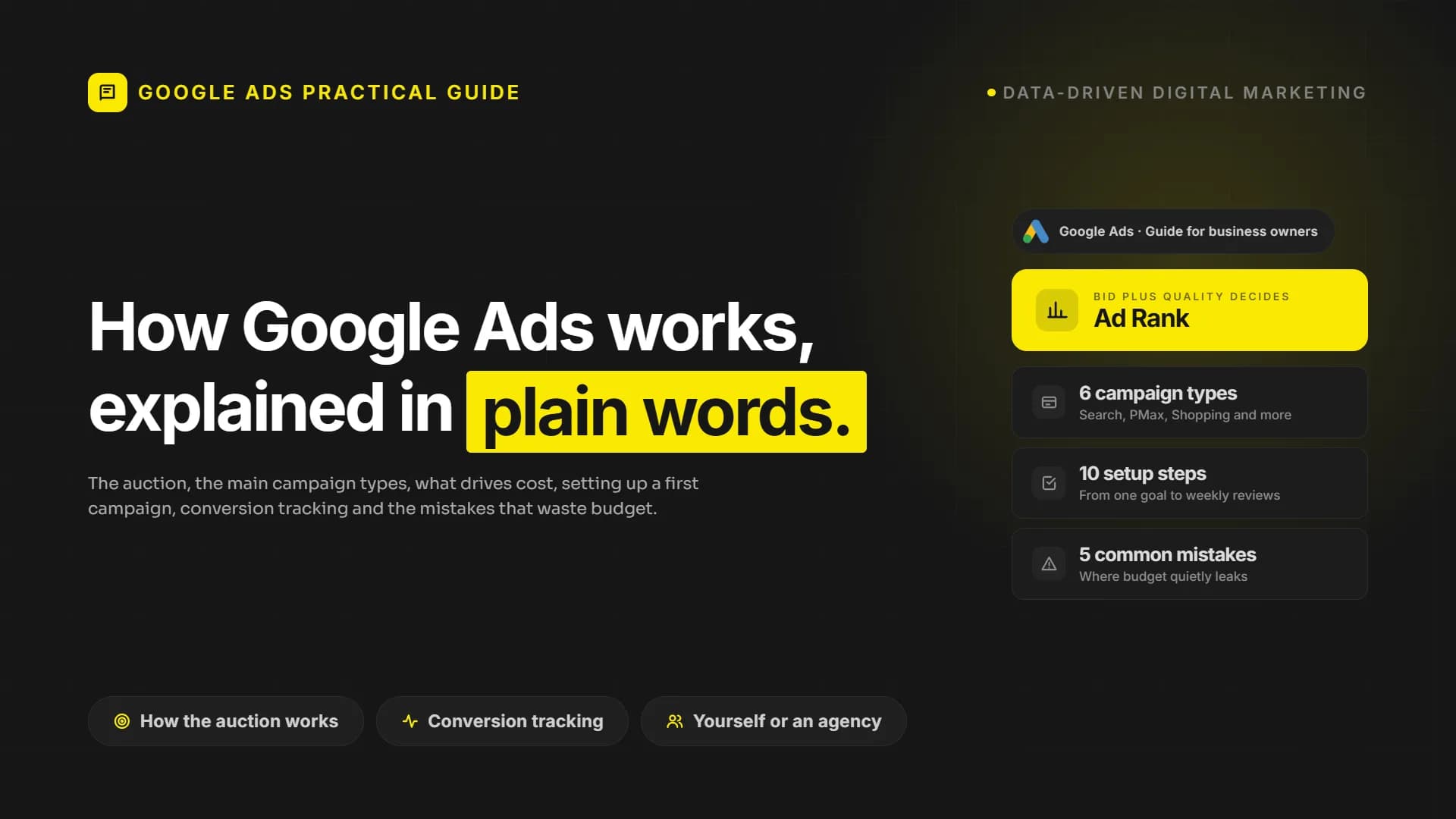
How Does Google Ads Work? A Practical Guide for Small Businesses
 Digital Marketing Strategy
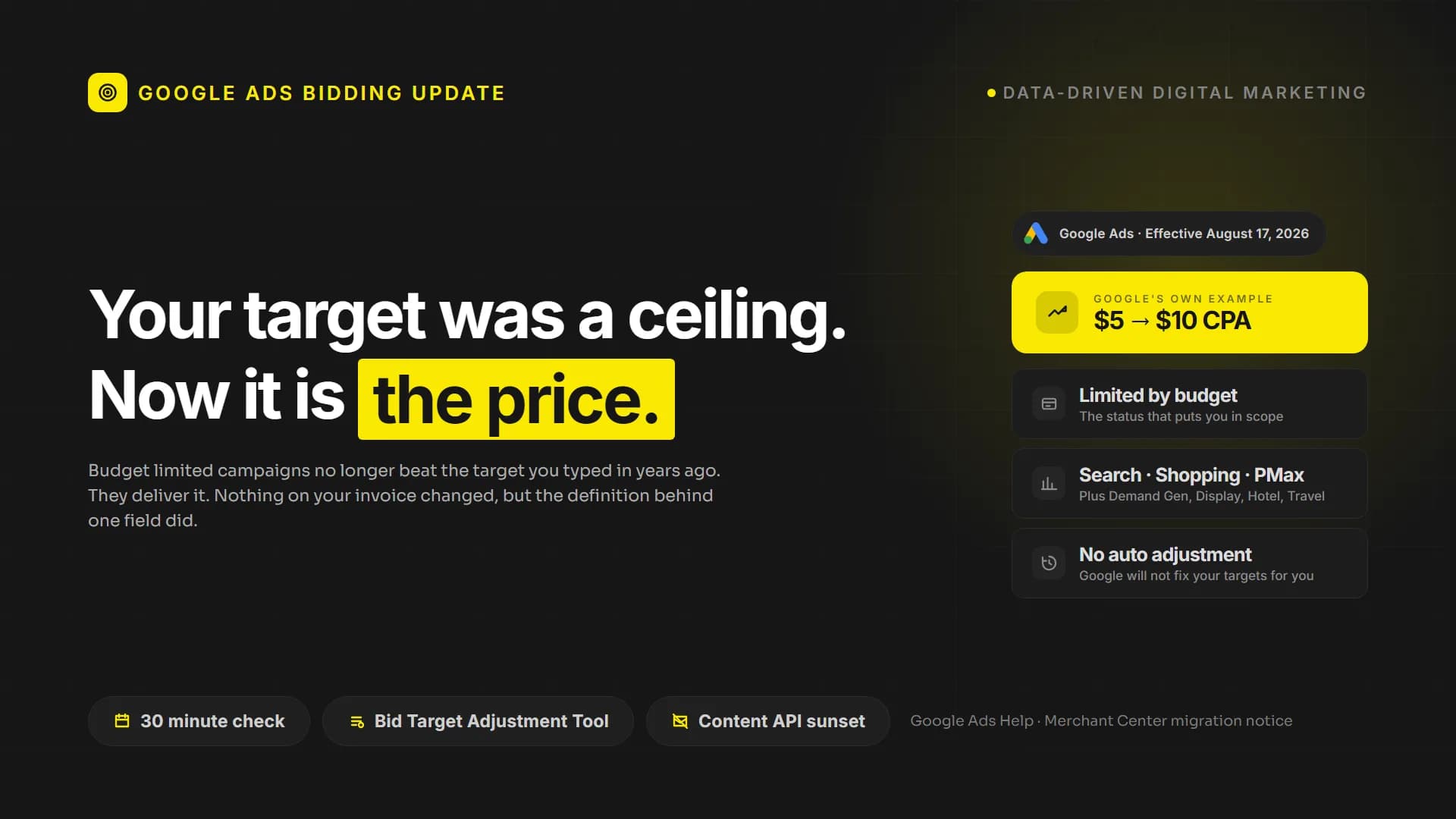
Google Ads Changed One Rule. Your Target Is Now Your Price.
 Data-Driven Digital Marketing